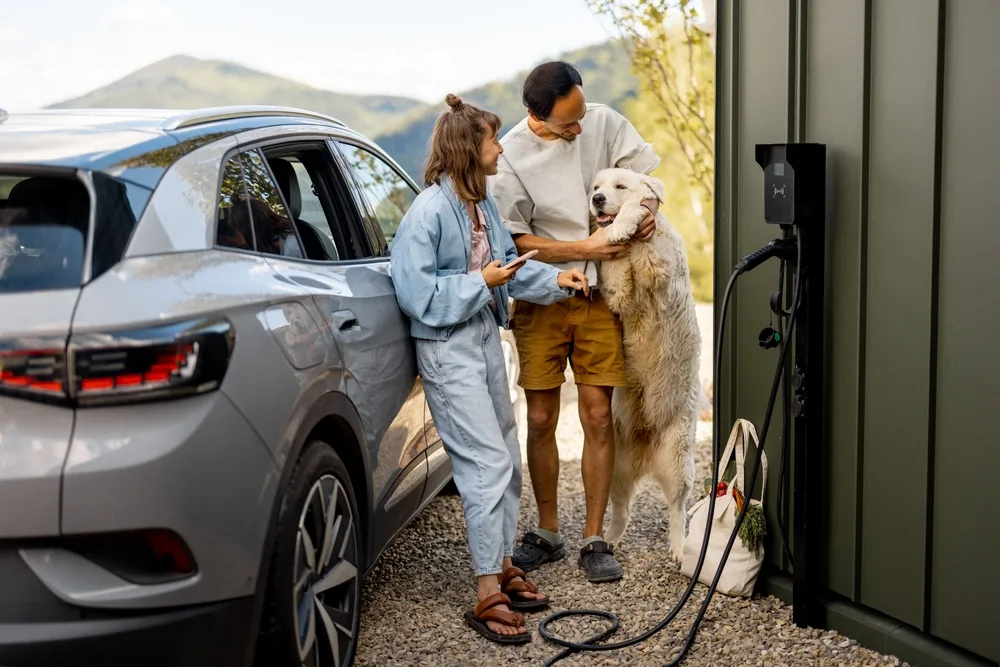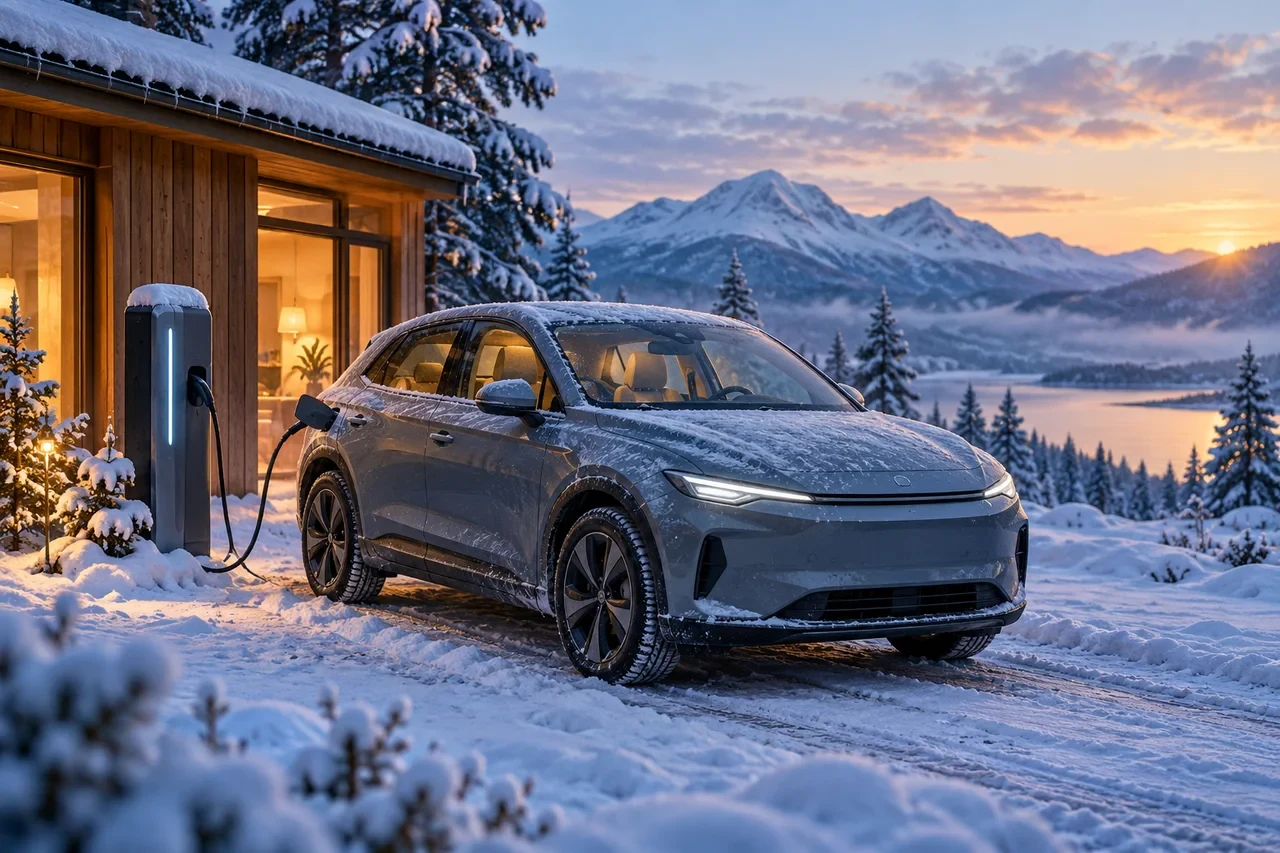
Illustrative editorial image generated with AI.
A healthy electric car can cover fewer miles in winter because its battery and heating system are working under different conditions. A lower range estimate on a freezing morning is therefore not, by itself, evidence of battery degradation. The useful question is where the energy is going and whether the change follows the weather.
The battery and cabin both need energy
A cold battery may temporarily provide less usable energy and accept charge more slowly. The car can also spend energy bringing the pack toward its preferred operating temperature. Meanwhile, cabin heating uses the same energy supply that moves the wheels. A heat pump can reduce that demand in suitable conditions, but it does not make temperature irrelevant.
The US Department of Energy's winter advice explains why warming the vehicle while connected to a charger can help. There is no single winter-loss percentage that predicts every model, route and temperature.
Short trips make the difference look bigger
Consider a car parked outside overnight and driven only a few miles. It spends part of that journey warming a cold cabin, then sits long enough to cool again. Repeating that pattern creates a different energy demand from one continuous journey. Comparing a summer motorway trip with winter school runs is not a fair battery-health test.
Look at energy consumption over similar routes as well as the dashboard distance estimate. That estimate reflects assumptions and recent use; it is not a laboratory measurement of remaining battery capacity. Note outside temperature, speed, heating use and whether the car started warm.
Build a winter departure routine
- Use the manufacturer's departure scheduling or preconditioning feature while plugged in when available.
- Keep enough charging margin for delays and an alternative charging stop; follow the model's charging recommendations.
- Check cold tyre pressures against the vehicle placard, and clear snow from the car.
- Use seat heating where helpful, while maintaining cabin comfort and clear windows. Never trade demisting or safe visibility for a range target.
On some models, navigation to a compatible fast charger also prepares the battery. Check the manual rather than assuming cabin heating activates every battery-conditioning function. Tesla's Model Y guidance, for example, describes temporary limits on charging and regenerative braking when the battery is cold; other vehicles communicate these limits differently.
When to investigate further
A seasonal reduction that improves as conditions warm is different from a persistent, unexplained change. Seek service advice if warnings appear, charging repeatedly fails, or range remains unusually poor on comparable trips in mild weather. Bring your route and consumption notes. For broader preparation, NHTSA's winter checklist also covers tyres, batteries and emergency supplies.