Illustrative editorial image generated with AI.
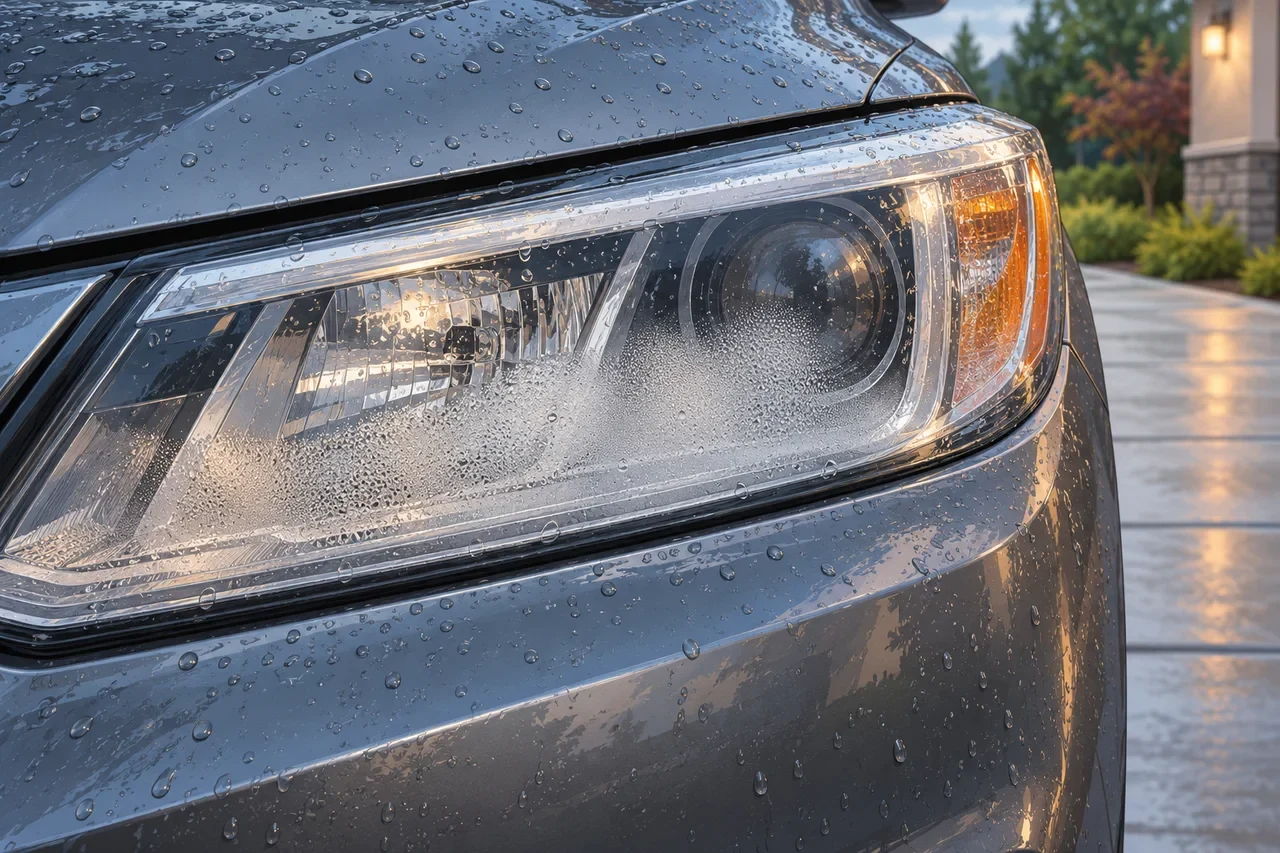
A light haze inside a headlamp after rain or a car wash does not automatically mean the lamp is broken. Many headlamp assemblies have vents, so changes in temperature and humidity can produce temporary condensation. Water pooling at the bottom, persistent streaks or a failing light deserve a different response.
Why a vented lamp can look foggy
The air inside the housing contains moisture. When conditions change and the inner surface of the lens is cool enough, that moisture can become visible as a fine film. Vents accommodate pressure changes and allow moisture to leave under suitable conditions. A housing that looks closed from outside is therefore not necessarily designed as an airtight container.
Ford's condensation guidance distinguishes a fine mist from pooling water, streaks and large droplets. Its clearing-time example applies to its guidance and conditions; do not turn one manufacturer's time limit into a universal rule for every lamp.
Observe the pattern before attempting a repair
Check the lamp when the vehicle is safely parked. Photograph the inside haze, note the weather and whether it followed washing, and compare both sides. Look again after normal use and a change to drier conditions. A thin film that recedes tells a different story from an expanding puddle after every shower.
Make sure you are seeing moisture inside the lamp rather than droplets on its exterior. A clean outer lens makes the distinction easier. Record any flickering, warning messages or visibly reduced light output; those details matter more to a workshop than the statement that a headlamp sometimes looks cloudy.
When a workshop should inspect it
Arrange an inspection for standing water, repeated drip trails, a cracked lens, damaged housing or moisture accompanied by an electrical fault. A cover disturbed during a bulb change can be relevant, as can an impact or previous repair. The technician needs to identify the entry point or ventilation problem rather than assuming every case requires an entire new lamp.
A Freightliner service bulletin archived by NHTSA illustrates this distinction with checks for specific housing plugs and entry points. Those checks are vehicle-specific, not a drilling or dismantling guide for passenger cars.
Avoid turning mist into permanent damage
Do not drill drainage holes, block vents with sealant or apply a heat gun to the lens. Improvised changes can alter the housing and complicate diagnosis. Follow the vehicle's cleaning instructions instead of directing concentrated pressure-washer spray into seams or covers.
If the lamp is unreliable or the beam is impaired, avoid relying on it for a night journey and obtain repair advice promptly. For ordinary light mist without a functional problem, keep the observations and consult the exact model's manual before buying parts.